EMG piano
Play notes and chords with muscle signals instead of key presses, for people with limited finger mobility.
2025–26CompleteEMGML
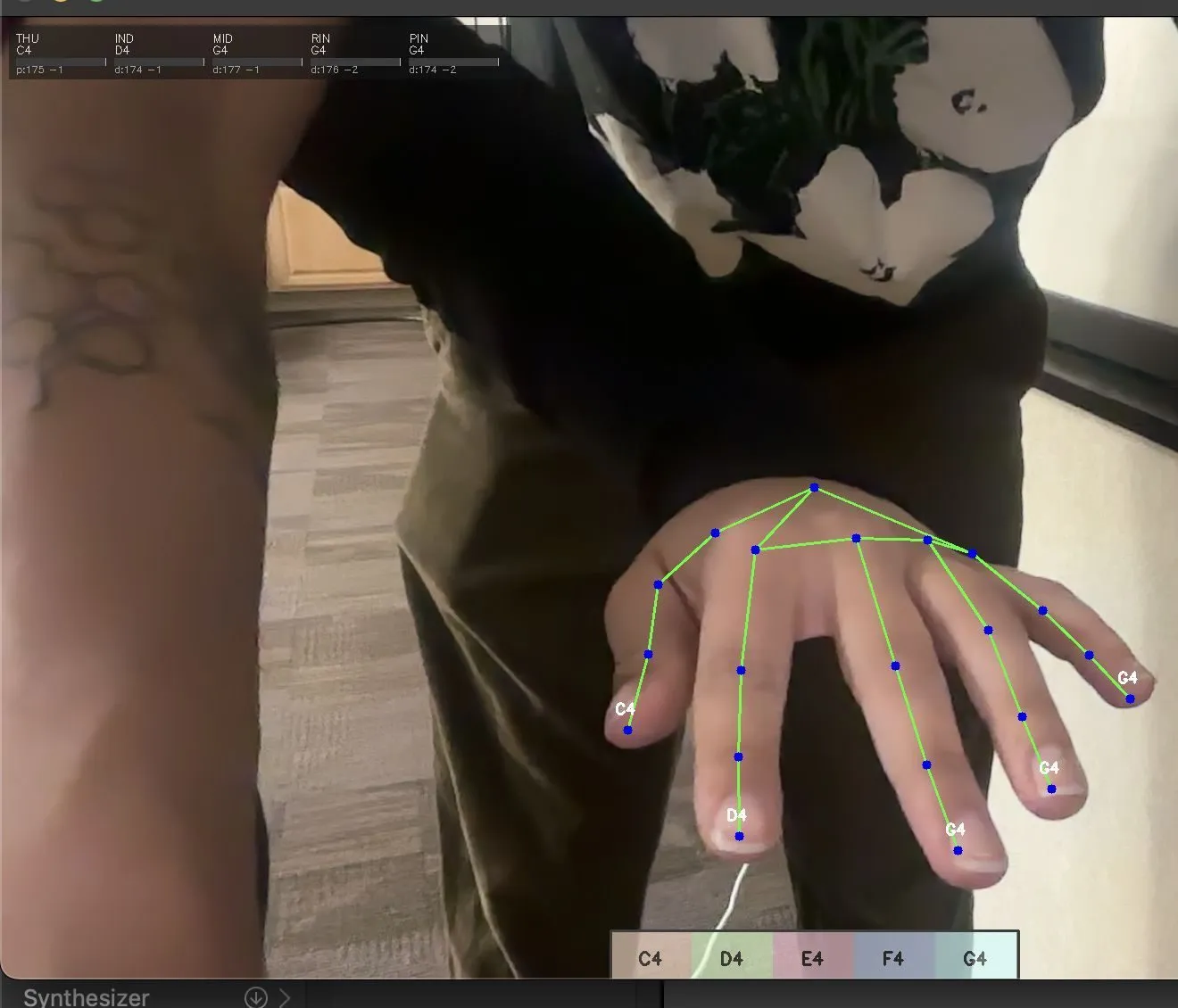
Goal
Let people play piano without fine finger movement or a physical keyboard, for example after a stroke or spinal cord injury. EMG reads finger positions, and an accelerometer handles hand position and the sustain pedal.
Approach
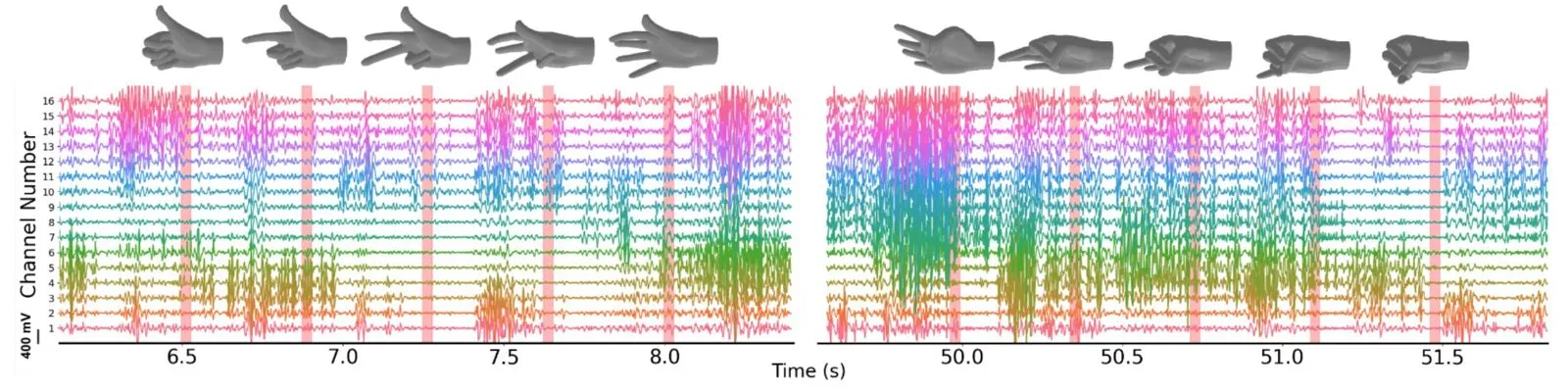
- Pretrained a small Vision Transformer on emg2pose, a large dataset pairing EMG with hand pose
- Fine-tuned it on the team’s own piano EMG recordings
- Treated each moment as multi-label classification of notes and chords
Results
Trained on single notes, repeated notes, note transitions, simple triads and mixed sequences:
- Single and repeated notes worked best
- Simple triads decoded reasonably well
- Sharps and flats were harder, since the finger differences are subtle
- Complex chords were hardest, because their EMG signals overlap
Next steps
- Move from 4-channel to 8-channel EMG
- Collect more varied playing data
- Test across sessions and armband placements
This work feeds into this year’s sEMG-based third arm.