EEG + EMG wheelchair
A motorized wheelchair driven by muscle signals, with EEG confirming the rider actually means to move before any command goes through.
2025–26CompleteEEGEMGMLHardware
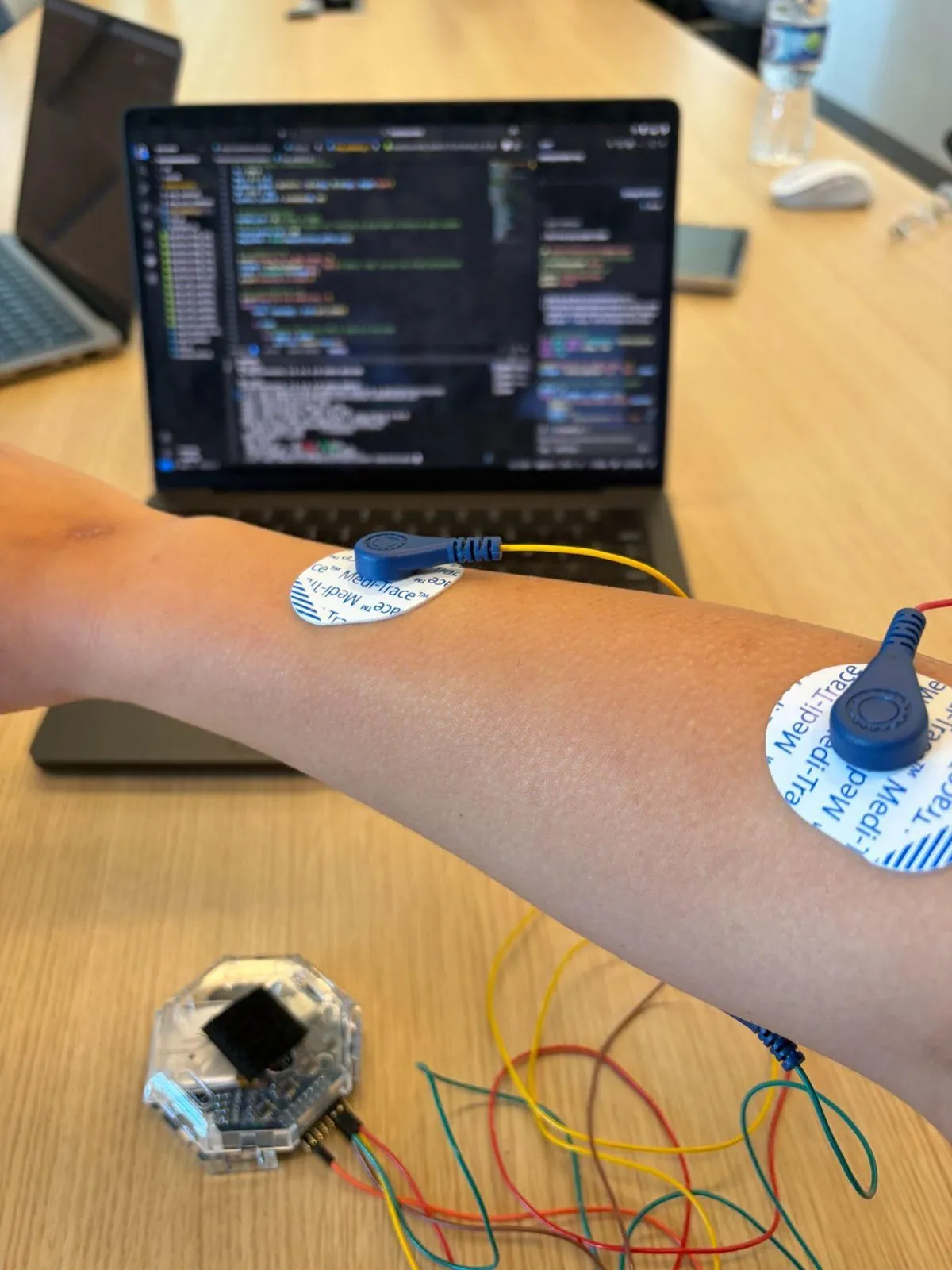
Goal
A dual-control wheelchair for people with paralysis below the waist. EEG checks for intent to move, and EMG decides the direction: forward, stop, left or right.
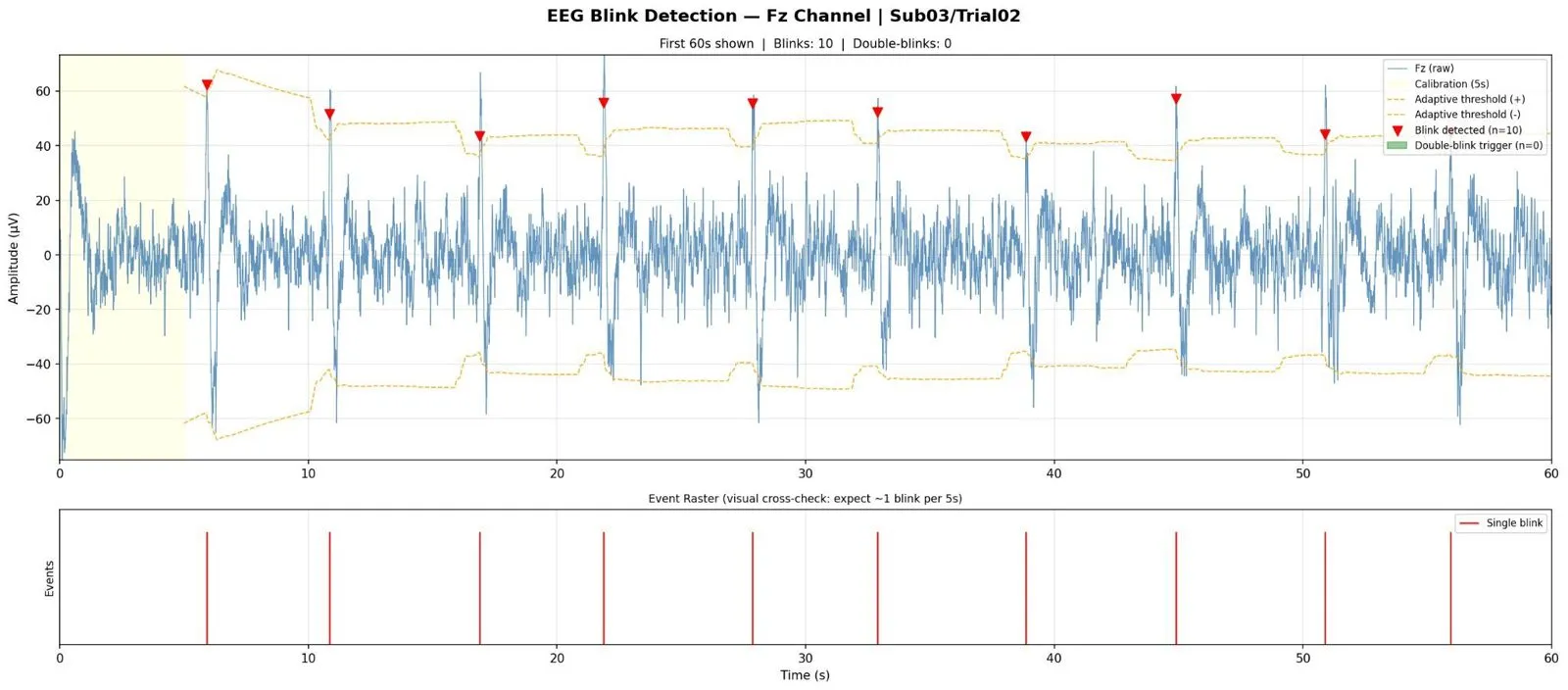
EEG: intent gating
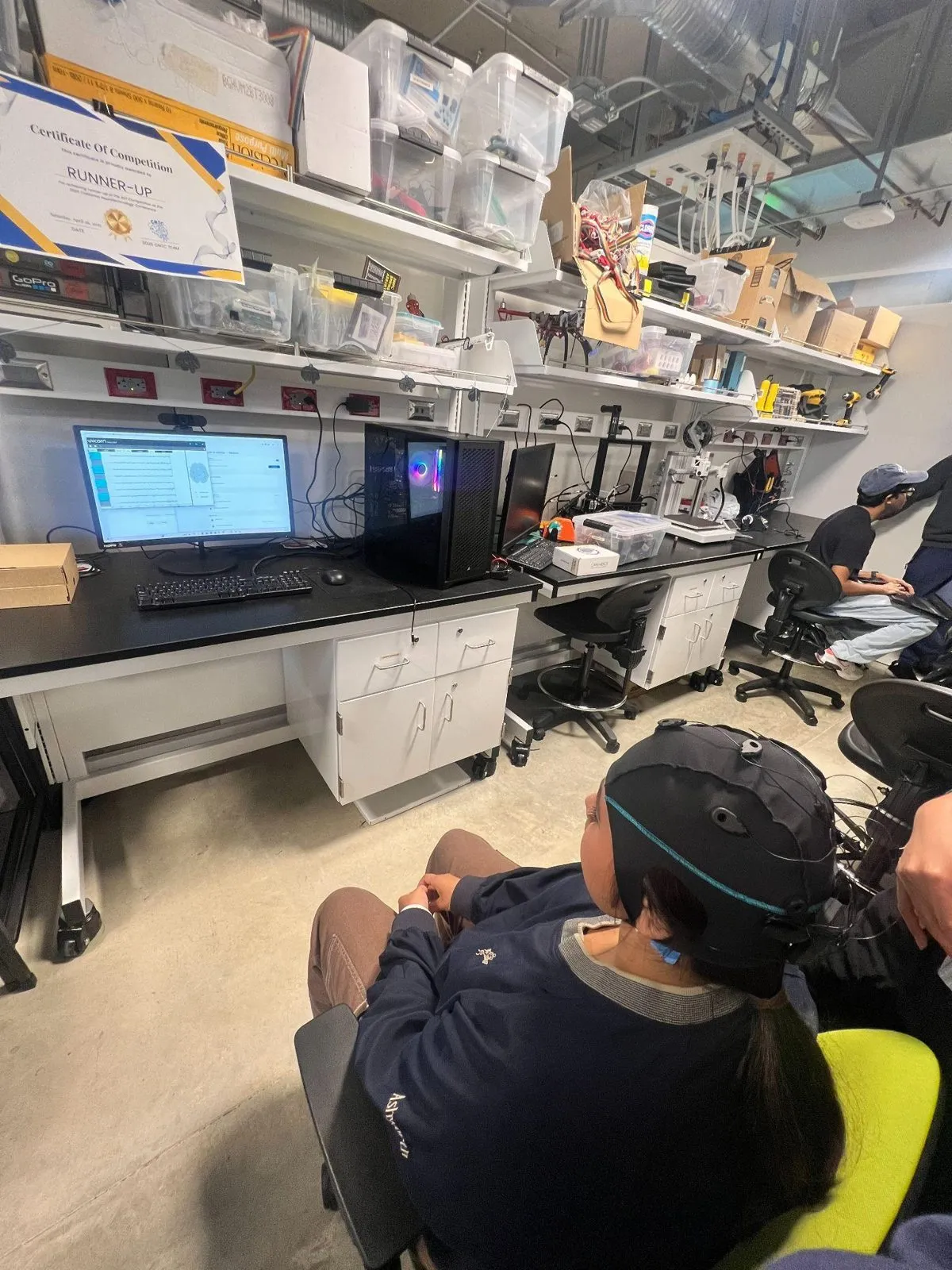
- An 8-channel dry-electrode Unicorn Hybrid Black headset streams EEG live.
- The working version uses a double eye blink as the “go” signal, detected as two large spikes on the Fz electrode. The online classifier reaches near-100% accuracy on competition data.
- Motor imagery control (imagining a movement) is the next step. Early CSP + LDA models on C3, Cz and C4 reached 50–70%.
EMG: motion control
A single classifier struggled to answer two questions at once: what movement happened, and which sensor picked it up. The team split it into a two-stage cascade:
- A motion classifier (SVM and ensemble, trained on UCI data and then the team’s own) identifies flex, extend or rest.
- A small location classifier identifies which electrode patch fired.
This improved accuracy and made the pipeline ready to deploy. Commands are mapped to an ESP32 for forward, stop and reverse.
Drive hardware
- Two 12 V batteries
- Motor drivers
- 250 W, 24 V motors
- ESP32 microcontroller
Next steps
- Four-channel EMG for turning left and right
- Connect the motors to the control board